
And We have made the heaven a roof, well protected, still they turn away paying no heed to its (heavenly) signs.
(Al-Anbiya 32. Verse)
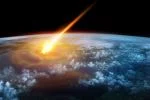 The atmosphere surrounding the world performs extremely vital functions for the continuation of life. When they approach Earth, it destroys many large and small asteroids, preventing them from falling into the earth and damaging living things. Meteors enter Earth's atmosphere at a speed ranging from 11-72 km per second. Due to the heat caused by friction, most of it can melt and land in dust particles. Despite its transparent structure, our atmosphere provides protection like a steel barrier against this meteor bombardment.
In addition, the atmosphere filters harmful rays to creatures from space. The most striking feature of this function of the atmosphere is that it only allows harmless and useful rays, ultraviolet light and radio waves to pass. All this radiation is very important to life. Ultraviolet rays, partially permitted by the atmosphere, are crucial for photosynthesis of plants and the survival of all living things. The majority of intense ultraviolet rays emitted from the sun are filtered by the ozone layer of the atmosphere. Only a limited and significant part of the ultraviolet spectrum reaches Earth.
The protective function of the atmosphere does not end here. The atmosphere also protects the Earth from the freezing cold of space, which is about -270 degrees Celsius. The atmosphere allows the heat on earth to be distributed in a balanced manner depending on the air movements that occur inside it. Where it's too hot, the air masses move to places where it's not hot and strike a balance. Thus, excessive temperature increase is prevented in places that are constantly warming around the equator; similarly, in places near the poles, the temperature that constantly loses heat is prevented from overdropping.
Van Allen Belt
It is not only the atmosphere that protects the Earth from harmful effects. In addition to the atmosphere, the Van Allen Radiation Belt, the layer caused by the Earth's magnetic field, also acts as a shield against the harmful radiation that threatens our planet. About 58,000 kilometers from Earth is an invisible shield that prevents high-energy electrons from reaching Earth. This radiation, which is constantly emitted by the sun and other stars, is deadly for living things. Without the Van Allen Belt, enormous bursts of energy, called solar flares, that occur frequently in the Sun would destroy all life on Earth. In fact, Earth has the highest density of any planet in our Solar System. This large nickel-iron core is responsible for our large magnetic field. Mercury is the only other rocky planet with any magnetic field – but its field power is 100 times less than Earth's. Even Venus, our sister planet, has no magnetic field. The Van Allen radiation shield is a Earth-specific design.
It has been calculated that the energy transmitted in only one of these solar flares detected in recent years is approximately 40 million times the bomb dropped on Hiroshima in World War II. Along with heat and light, radiation and winds containing protons and electrons come from the sun to the earth at a speed of 1.5 billion km per second. However, winds from the sun cannot pass through the Van Allen shield, which creates magnetic rings between 640 km and 58,000 km from the earth.
In short, a perfect system up in the world is at work. It surrounds our world and protects it against external threats. Centuries ago, Allah informed us in the Qur'an that the earth's atmosphere functioning as a protective shield.
Altitude Sickness
Those whom Allah (in His plan) willeth to guide,- He openeth their breast to Islam; those whom He willeth to leave straying,- He maketh their breast close and constricted, as if they had to climb up to the skies: thus doth Allah (heap) the penalty on those who refuse to believe.
(Al-An'am 125. Verse)
 Altitude sickness is a condition caused by rapid exposure to low amounts of oxygen at high altitude. It causes the chest to tighten due to the expansion of gases in the body cavities and their pressure on the lungs. In addition, the development of dissolved gases (in the body) in the form of bubbles at high altitude causes severe chest pains.
Mountain sickness, or high altitude shortness of breath, was clinically described in 1937 and was most likely unknown before the late 1800s. There are several reasons for this, but the most important is that mountain sickness requires a rapid ascent, generally an altitude of 2500 meters or more. Prior to the twentieth century, such ascensions were occasionally made, but almost never quickly.
Ancient peoples had little reason to climb mountains and especially to higher altitudes. Mountaineering was almost unheard of, especially in the Middle East. The mountain peoples were accustomed to the lack of oxygen in the atmosphere in which they lived. The bodies of those who went higher to graze their herds did not have a problem due to the slow altitude rise.
Therefore, we can conclude that the phrase "maketh their breast close and constricted, as if they had to climb up to the skies" refers to the physical fact that air pressure decreases at high altitudes and makes it difficult to breathe. This is a scientific issue that we now know, but 1400 years ago, no one was aware of this reality, especially on Arabia's hot desert peninsula!
Allah knows best in everything.
God’ed? – Dr. Laurence B. Brow
Islamic Sciences – Mohammed Mehboob Hussain
https://questionsonislam.com/..
https://www.imamreza.net/..



 Download Quran


